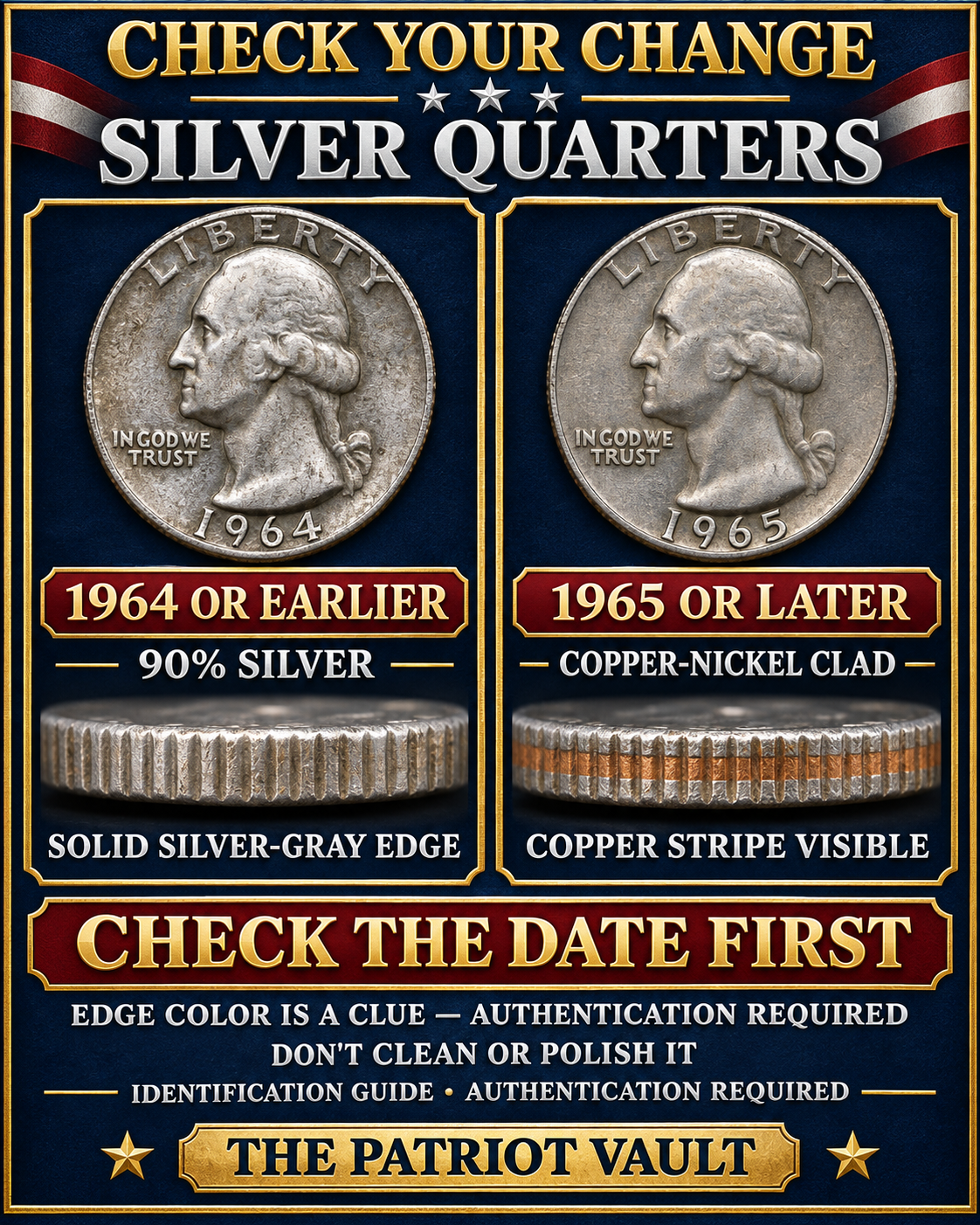
Some of the easiest valuable coins to identify require no magnification or knowledge of obscure Mint errors. Simply check the date.
Today’s Check Your Change find is the 90% silver U.S. quarter dated 1964 or earlier.
What should you look for?
Begin by checking the date on every older-looking quarter. Circulation-strike Washington quarters produced from 1932 through 1964 contain 90% silver and 10% copper.
The quickest test is the date:
- 1964 or earlier: Generally 90% silver
- 1965 or later: Generally copper-nickel clad, unless it is a special collector issue or authenticated error
Next, examine the reeded edge. A silver quarter normally has a consistent silver-gray appearance across the edge. Modern clad quarters usually display a visible copper-colored stripe running through the center.
The edge test is helpful but not conclusive. Dirt, toning and wear can disguise the layers, so the date and professional authentication remain important.
Why did quarters stop containing silver?
Washington first appeared on the quarter in 1932 to commemorate the 200th anniversary of his birth. These quarters were struck in 90% silver through 1964.
Rising silver prices and a nationwide coin shortage placed pressure on the country’s coin supply during the 1960s. Beginning in 1965, the United States Mint removed silver from circulating dimes and quarters and replaced it with the familiar copper core and copper-nickel outer layers used today.
Because silver quarters have been removed from circulation for decades, finding one in change is unusual—but it still happens when old jars, inherited accumulations or forgotten collections are spent or deposited at banks.
How much is a silver quarter worth?
As of November 17, 2026, a common Washington quarter dated 1932–1964 contains approximately $8.60 worth of silver, based on its 0.1808 troy ounce actual silver weight. That intrinsic value changes every day with the silver market.
That does not mean every dealer will pay exactly the calculated melt value. Actual offers and selling prices reflect the current spot price, dealer spreads, quantity and local demand.
Some silver quarters are worth more than their metal content. Better dates, scarce mintmarks, attractive uncirculated coins, proofs and recognized varieties may carry substantial collector premiums. A heavily worn common-date quarter will generally trade primarily for its silver, while a scarce or exceptionally preserved example should be evaluated individually.
Do not assume a large online asking price represents the coin’s actual market value. Date, mintmark, authenticity and condition all matter.
What should you do if you find one?
Do not clean, polish, dip or attempt to brighten the quarter. Natural toning and original surfaces are preferable to scratches or chemical damage caused by cleaning.
Hold the coin by its edges and photograph both sides, including the date and any mintmark. Store it separately in a non-PVC coin flip or protective capsule. If it appears unusually sharp or carries a potentially scarce date or mintmark, have it evaluated before selling it for silver alone.
Have you found a silver quarter—or do you have old coins, paper currency, precious metals or a broader collection? The Patriot Vault may be interested in buying your coin, currency or collection. Reply to this post and tell us what you have!