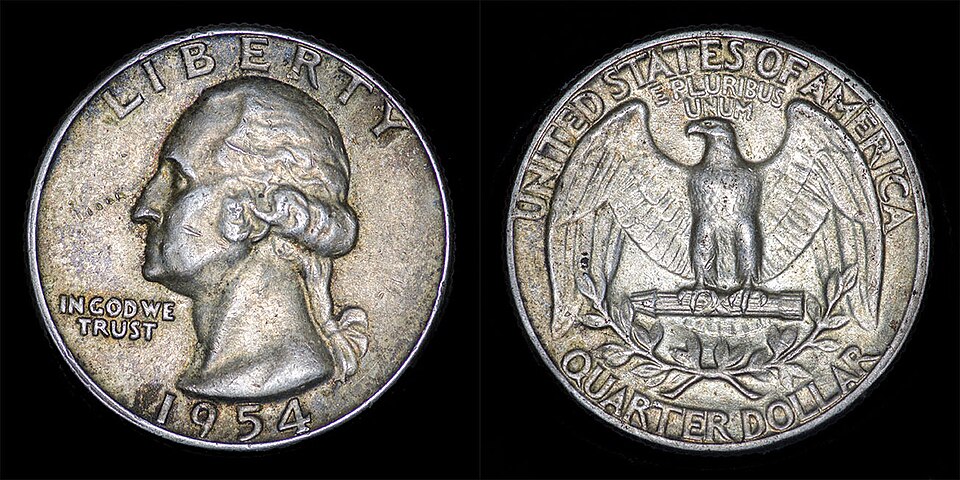
A Washington quarter can be worth many times its 25-cent face value—and identifying one begins with a simple date check.
Today’s Check Your Change find is the 1932–1964 Washington silver quarter. These coins have largely disappeared from circulation, but occasional examples still surface in pocket change, cash drawers, bank rolls, old coin jars and inherited collections.
What should you look for?
Begin by checking the date beneath George Washington’s portrait.
Every standard Washington quarter dated 1932 through 1964 was struck from an alloy containing:
- 90% silver
- 10% copper
- Approximately 0.1808 troy ounce of silver when originally issued
You can also examine the coin’s reeded edge. A silver quarter generally has a solid silver-gray appearance. A modern copper-nickel quarter normally displays a noticeable copper-colored stripe along its edge.
The date is the most reliable basic test. Dirt, toning or environmental discoloration can make the edge misleading.
Older Standing Liberty and Barber quarters also contain 90% silver, although their designs are noticeably different from the familiar Washington quarter.
A little history
The Washington quarter debuted in 1932 to commemorate the 200th anniversary of George Washington’s birth. Sculptor John Flanagan designed the coin, placing Washington’s portrait on the front and an eagle on the original reverse.
By the early 1960s, rising silver prices and a nationwide coin shortage caused Americans to remove silver coins from circulation. The Coinage Act of 1965 eliminated silver from standard circulating quarters and dimes.
Beginning with coins dated 1965, ordinary Washington quarters were made with copper-nickel outer layers bonded to a copper core. That is why checking the date and edge remains so useful.
How much is a silver Washington quarter worth?
A common worn silver quarter is normally valued primarily for its precious-metal content.
Based on silver prices on October 2, 2026, a 1932–1964 Washington quarter contained approximately $11.04 to $11.08 in silver value. Silver prices fluctuate throughout the day, so this amount will change. A dealer’s actual buying price may also differ from the calculated melt value.
NGC’s October 2026 guide values ordinary circulated 1964 and 1964-D quarters at approximately $11.50 to $14, depending on condition.
Earlier dates, scarce mintmarks and recognized varieties may carry additional collector value. Important issues include the low-mintage 1932-D and 1932-S quarters. Authentication, date, mintmark and condition determine the actual value.
What should you do if you find one?
Do not clean, polish, scrub, dip or attempt to brighten the quarter. Cleaning can permanently alter its surface and reduce any collector premium.
Hold it by the edges, photograph both sides and record the date and mintmark. On 1932–1964 Washington quarters, the mintmark—when present—appears on the reverse below the wreath. Place the coin in a non-PVC flip or protective capsule.
Have you found a silver quarter—or do you have coins, paper currency or a larger collection? The Patriot Vault may be interested in buying your coin, currency or broader collection. Reply to this post and tell us what you have!