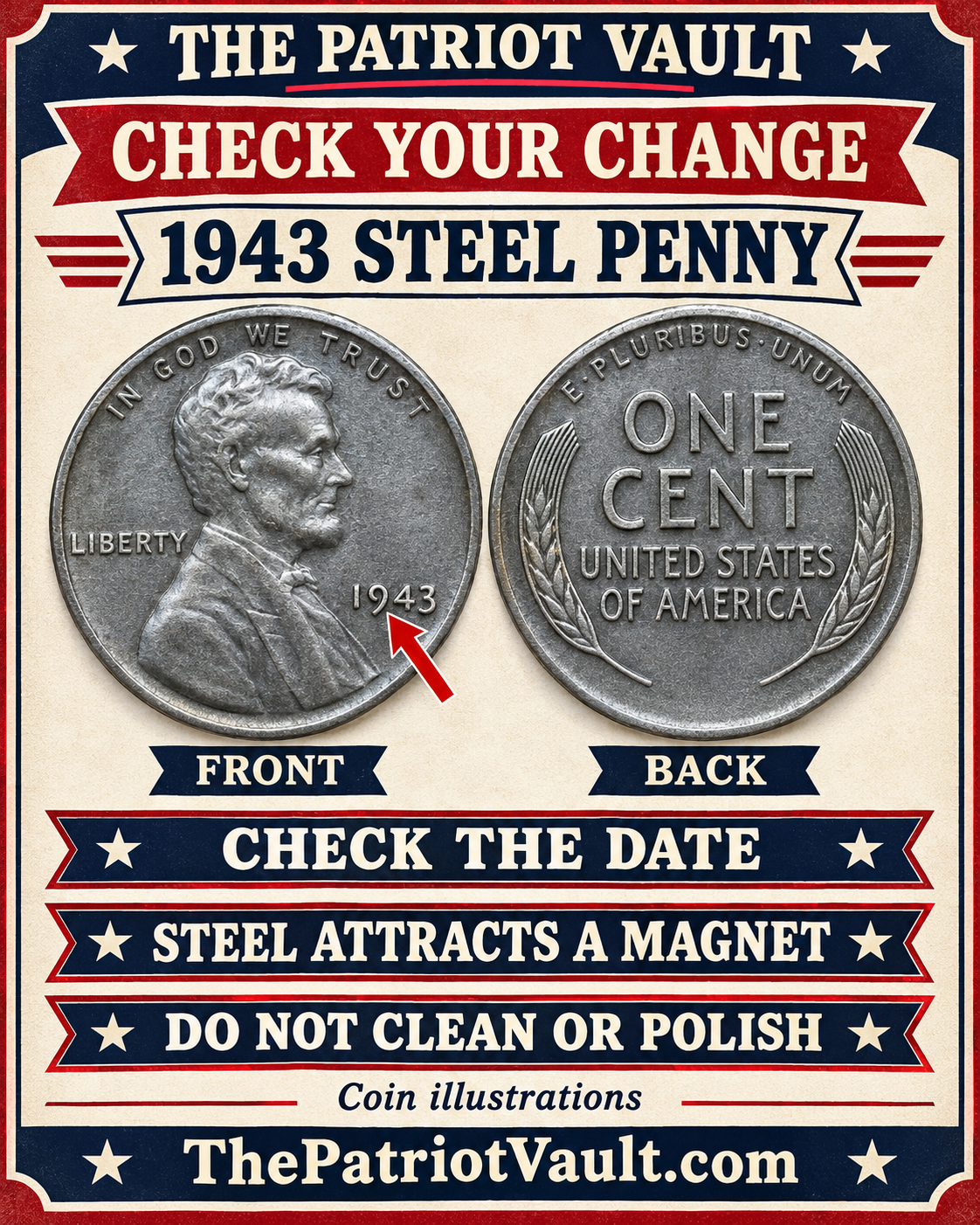
A gray penny in an old change jar might look like a dime at first glance. If it shows Abraham Lincoln on the front, two wheat stalks on the back, and the date 1943, bring a magnet near it. A regular 1943 steel cent will be attracted to the magnet. It’s a modest collectible with a good story: for one year during World War II, the U.S. Mint made its everyday pennies out of zinc-coated steel.
How to identify a 1943 steel penny
Start with the date, just in front of Lincoln’s chest. A Philadelphia cent has no mintmark, while a small D or S directly below the date identifies Denver or San Francisco. All three mints made steel cents that year. Flip it over and look for two wheat stalks framing ONE CENT and UNITED STATES OF AMERICA. The design is the familiar Wheat penny design; the metal is what makes this issue different.
Color is only a clue. Some steel cents are bright silver-gray, while others have darkened or developed rust. Bring a magnet close without dragging it across the coin. Attraction is consistent with a steel core, but it won’t tell you whether the coin has been replated, altered, or correctly graded. Likewise, a bright surface alone doesn’t mean the coin is uncirculated.
Why the Mint switched to steel
The wartime switch conserved copper. The Mint coated the steel with zinc, giving the new cent a gray appearance quite different from the familiar copper-colored penny. The Mint returned to a copper-based alloy in 1944. In its history of the steel cent, NGC notes that steel cents remained in circulation in dwindling numbers into the early 1960s. Today, an old jar or family accumulation is a more realistic place to look than expecting one in the next handful of checkout change.
What is a 1943 steel penny worth?
As of November 28, 2026, USA Coin Book estimates about 18 cents for an average-condition Philadelphia example and roughly $3 to $10 across the uncirculated grades in its summary. Think of the typical worn coin as a cents-not-dollars find. Those figures are guide estimates, not completed sales or buy offers, and apply to the ordinary steel issue—not a rare wrong-metal error.
Authentication and condition determine value. Rust, pitting, heavy wear, and altered surfaces can reduce collector interest. A coin with intact original surfaces can be more desirable than one made shiny by replating.
What to do if you find one
Handle it by the edges, photograph both sides, and store it somewhere dry in a non-PVC coin holder. Don’t clean, polish, flatten, scrape, or otherwise alter it. If it has rust spots, leave them alone rather than trying to remove them. And if a coin clearly dated 1943 doesn’t respond to a magnet, have a specialist examine it before assuming it’s an unusual issue.
Found a steel penny, or have other coins, paper money, or a broader collection? The Patriot Vault may be interested in buying. Reply to this post and tell us what you have!